
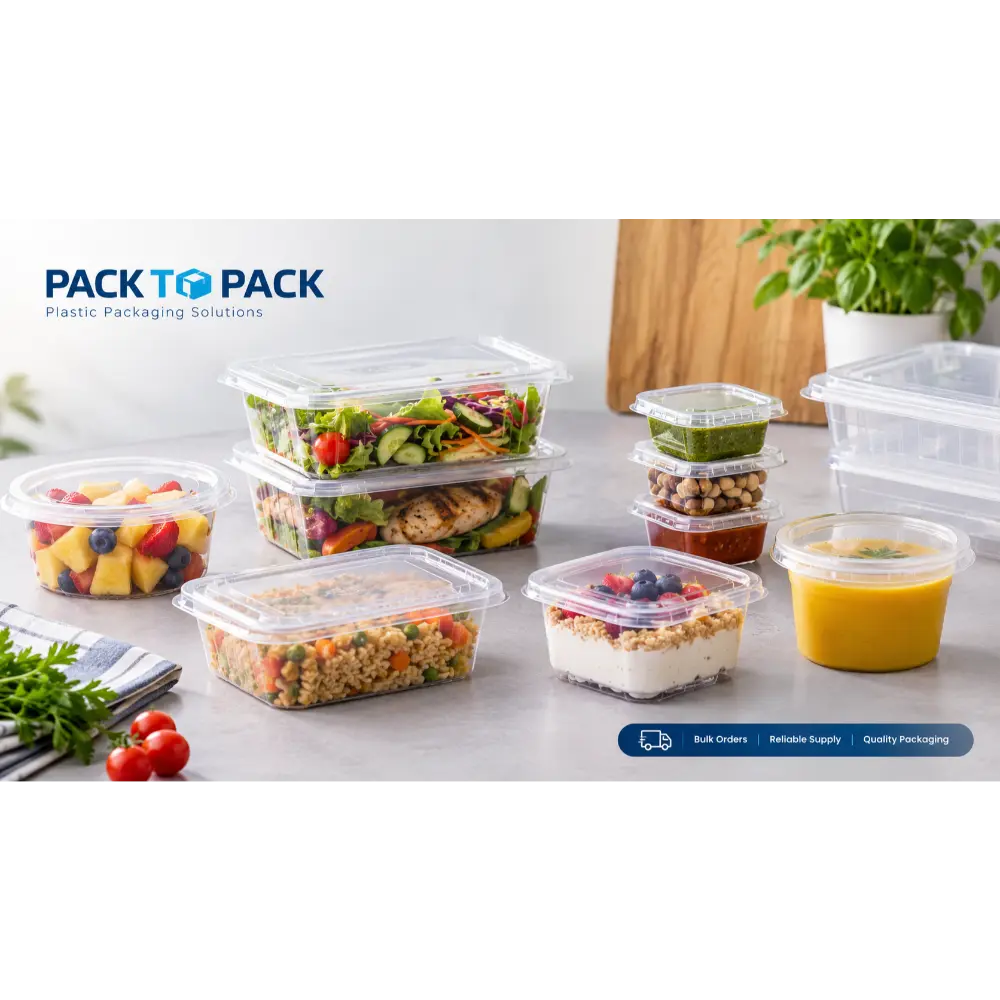
In this guide, we explain how to choose suitable plastic food packaging, what to consider when purchasing in bulk, and how to evaluate a packaging supplier for your business.
Why Do Food Businesses Buy Plastic Food Containers Wholesale?
Food businesses use packaging every day. Therefore, a reliable supply of suitable containers helps support smooth operations and consistent product presentation.
1. Maintain a Consistent Packaging Supply
Running out of containers can interrupt food preparation, order packing, and delivery. Purchasing wholesale quantities can help businesses plan their packaging needs and reduce the risk of unexpected shortages.
Before placing a bulk order, estimate your average daily usage. Then consider seasonal demand, expected sales growth, and the storage space available at your facility.
2. Support High-Volume Operations
Restaurants, catering companies, food manufacturers, and takeaway businesses may need large quantities of containers throughout the week. Wholesale purchasing can simplify replenishment by allowing buyers to plan orders around their actual consumption.
It is important, however, to select quantities that match your business needs. Ordering too much packaging can create storage problems, especially when you have limited warehouse space or several container sizes to manage.
3. Improve Packaging Consistency
Using consistent container designs and sizes helps create a more organized presentation. It can also make packing procedures easier for employees, particularly when a business handles many orders each day.
For example, a restaurant may use one container size for individual meals and another for family portions. A food manufacturer may require different packaging formats for several product lines.
4. Plan Packaging Costs More Effectively
Buying in bulk may offer a lower unit price, depending on the supplier, order quantity, and product specifications. Nevertheless, the lowest quoted price does not always represent the best overall value.
Compare the unit cost, minimum order quantity, delivery charges, storage requirements, and suitability of each container. This approach helps you evaluate the complete purchasing decision rather than focusing on price alone.
Types of Wholesale Plastic Food Containers for Different Businesses
Not every food product requires the same packaging. The right container depends on the product’s size, consistency, serving requirements, storage conditions, and method of distribution.
Clear Food Containers
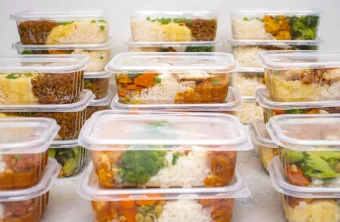
Clear containers allow customers and employees to see the food inside without opening the package. This can be useful for prepared meals, salads, desserts, and other products where visibility supports presentation.
When evaluating a clear container, consider its dimensions, lid compatibility, material specifications, and suitability for the intended food application. Also check whether the packaging provides the level of protection your product requires.
Rectangular Food Containers
Rectangular containers can be useful for meal portions, prepared foods, and products that benefit from an organized arrangement. Their shape may also help businesses use storage shelves and delivery bags efficiently.
Compare the base dimensions, depth, and usable capacity before choosing a size. A container should accommodate the intended portion without unnecessary empty space or excessive pressure on the lid.
Square Food Containers
Square containers may suit food products that require a compact, structured package. Depending on their design, they can also support organized storage and a consistent appearance across different product varieties.
Before ordering, assess how the containers fit into your existing packing process. Consider stacking, storage space, lid fit, and the way staff will handle them during busy periods.
Containers with Secure-Fitting Lids
For takeaway and delivery businesses, the relationship between the container and its lid is especially important. A suitable lid can help protect the contents during handling when the packaging is correctly matched and used as intended.
Ask the supplier about lid compatibility and the intended application. If your business handles liquids, sauces, or foods that may move during transport, evaluate the complete container-and-lid combination under realistic conditions.
A secure-fitting lid should not automatically be described as leakproof or airtight. Those claims should only be used when supported by the product’s specifications and appropriate testing.
Ice Cream and Dessert Containers
Ice cream shops, dessert producers, and food manufacturers may need packaging designed for specific product types and serving sizes. The right container should suit the product’s volume, handling requirements, and storage conditions.
For frozen products, confirm that the selected packaging is suitable for the intended temperature range. Do not assume that every plastic container performs equally well in freezing conditions.
How to Choose the Right Wholesale Plastic Food Containers in Egypt
Before contacting a supplier, identify your packaging requirements. A clear specification makes product comparisons easier and helps reduce the risk of ordering unsuitable containers.
1. Identify Your Food Product
Start by describing the food you intend to package. A dry snack may require different packaging from a prepared meal, a sauce, or a frozen dessert.
Consider the product’s consistency, portion size, moisture content, and expected handling conditions. If the food will be heated, frozen, or stored for an extended period, confirm that the packaging is suitable for those conditions.
2. Select the Correct Size and Capacity
Container capacity affects portion presentation, packing efficiency, and storage. Choosing a container that is too small may cause spills or damage to the product. Choosing one that is too large can increase unnecessary packaging space.
Measure your typical portions and compare them with the supplier’s dimensions and stated capacity. If possible, test a sample before committing to a large order.
3. Check Food-Contact Suitability
Food packaging should be appropriate for the type of food and the conditions in which it will be used. Ask the supplier for relevant material information and documentation supporting the intended application.
Depending on the product and its use, important considerations may include food-contact compliance, temperature limitations, and restrictions related to heating or freezing.
Never assume that a container is microwave-safe, freezer-safe, or suitable for hot food unless its specifications confirm that use.
4. Evaluate the Lid and Closure
A container and its lid should work together as intended. Check how easily the lid attaches, whether it stays in place during normal handling, and whether the design suits your packaging process.
For delivery operations, test the packaging with representative food portions and realistic handling conditions. This can help identify problems before they affect customer orders.
5. Compare Order Quantities and Pricing
When comparing wholesale suppliers, ask for pricing based on your expected order quantity. Also confirm the minimum order quantity, packaging units, availability, and any additional charges.
For a fair comparison, make sure each quotation covers the same container size, design, material, and lid configuration. Otherwise, a lower price may reflect a different product specification.
6. Review Availability and Lead Times
Reliable replenishment matters when packaging is essential to daily operations. Ask about current availability, expected lead times, and how the supplier handles repeat orders.
If your business experiences seasonal demand or frequent sales fluctuations, discuss your estimated purchasing schedule in advance. Planning ahead can help you manage inventory more effectively.
7. Consider Storage and Transportation
Bulk packaging requires adequate storage space. Before ordering, estimate how many cartons your facility can accommodate and how easily employees can access the containers.
Also consider how the packaging will be transported from your facility to the point of use. Suitable dimensions, practical stacking, and organized storage can make everyday handling easier.
Who Can Benefit from Wholesale Plastic Food Containers?
Different food businesses have different packaging priorities. Identifying your business category helps narrow the available options.
Restaurants and Takeaway Businesses
Restaurants need packaging that supports portioning, order preparation, and customer collection. Takeaway businesses may also need containers that fit their delivery workflow and help protect food during transport.
Look for practical sizes, compatible lids, and packaging that suits your menu. If you sell meals in several portion sizes, standardizing a small range of containers may simplify inventory management.
Catering Companies
Catering operations often prepare food in larger quantities and handle multiple orders at once. Packaging selection should reflect portion requirements, transport arrangements, and the way meals are distributed.
Before ordering, assess the number of portions required for typical events and the storage capacity available between orders.
Food Manufacturers
Food manufacturers may need packaging in consistent quantities for regular production. Product specifications, material suitability, supply planning, and compatibility with filling or packing processes are important factors.
Manufacturers should also verify that the packaging meets the requirements applicable to their specific product and production environment.
Supermarkets and Food Retailers
Food retailers may require containers for prepared foods, chilled products, desserts, and other items sold to customers. Packaging should suit the product’s presentation, storage conditions, and handling requirements.
Consider the available shelf space, product visibility, container dimensions, and the information customers need when selecting packaged food.
How to Evaluate a Plastic Food Packaging Supplier in Egypt
Choosing the right supplier is an important part of managing packaging procurement. A supplier should be able to explain its product range and provide clear information about ordering requirements.
Use the following checklist when comparing suppliers:
- Product range: Can the supplier offer the container types, sizes, and designs your business requires?
- Product specifications: Are material information, dimensions, and intended uses clearly explained?
- Pricing: Can you obtain a quotation based on your required quantity and exact specifications?
- Availability: Are the products available in the quantities and time frames you need?
- Order requirements: Are minimum quantities, payment terms, and delivery arrangements clear?
- Communication: Can you contact the supplier to discuss product suitability and repeat orders?
- Documentation: Can the supplier provide relevant product information and supporting documentation where applicable?
It is also useful to request samples when available. Testing a sample can help you assess dimensions, lid fit, ease of handling, and suitability for your packing process before placing a larger order.
Common Mistakes to Avoid When Buying Plastic Food Containers Wholesale
Bulk purchasing can be efficient, but a few avoidable mistakes may create additional costs or operational difficulties.
Choosing Based on Price Alone
A low unit price may look attractive, but the packaging must still meet your requirements. Compare specifications, quality, order conditions, and delivery costs before making a decision.
Ordering Without Checking the Dimensions
Product names and general descriptions may not provide enough information to confirm the correct size. Always check the stated dimensions and capacity, and test a sample when possible.
Ignoring Lid Compatibility
Not every lid fits every container. Confirm that the selected lid is intended for the exact container model and test the combination before ordering in bulk.
Overestimating Demand
Excessive inventory can take up valuable storage space and tie up working capital. Estimate your usage based on actual sales and expected demand rather than ordering more than you can reasonably use.
Assuming All Containers Suit Every Temperature
Plastic packaging varies by material and design. Confirm the permitted temperature range and intended application before using a container for hot food, freezing, or reheating.
Why Choose PACK TO PACK for Your Food Packaging Requirements?
Finding suitable packaging starts with understanding your products and purchasing requirements. PACK TO PACK is a starting point for businesses exploring plastic packaging options for food-related applications.
When discussing your requirements with a packaging supplier, prepare the following details:
- The type of food you intend to package.
- The preferred container shape and approximate capacity.
- Whether you need matching lids.
- Your estimated order quantity and purchasing frequency.
- Any special requirements for storage, transport, or temperature.
- Your preferred delivery location and required time frame.
Sharing these details can make it easier to identify suitable products and obtain a quotation based on your business needs. Always confirm product availability, specifications, minimum order quantities, and delivery arrangements directly with the supplier.
Request a Quote for Wholesale Plastic Food Containers in Egypt
Are you looking for plastic food containers for your restaurant, catering operation, takeaway service, or food production business? The right packaging can help you organize daily operations and maintain consistent product presentation.
Contact PACK TO PACK to discuss your packaging requirements and request a quotation. Share the container type, size, estimated quantity, and intended use so the team can help you explore the available options.
Visit PACK TO PACK to explore your packaging options and get in touch.
Make your next bulk packaging purchase with a clear understanding of the product specifications, quantities, and delivery requirements your business needs.
Frequently Asked Questions About Wholesale Plastic Food Containers in Egypt
Where can businesses buy wholesale plastic food containers in Egypt?
Businesses can contact packaging suppliers that serve commercial food applications. Before ordering, compare the product range, specifications, pricing, minimum order quantities, availability, and delivery arrangements. PACK TO PACK is one option to explore for your packaging requirements.
Which plastic food containers are suitable for restaurants?
The best choice depends on the menu, portion sizes, storage conditions, and delivery method. Restaurants may consider clear, rectangular, square, or other suitable container designs. Check the product specifications and lid compatibility before purchasing.
How do I choose the right container size?
Start with your usual portion sizes and measure the food you need to package. Compare these measurements with the container’s dimensions and capacity. Testing a sample can help you confirm that the food fits properly and is presented as intended.
Are all plastic food containers safe for hot food?
No. Suitability depends on the container’s material, design, and stated temperature limits. Ask the supplier to confirm whether the product is appropriate for the intended food and temperature conditions.
Can I order plastic food containers in bulk for my business?
Wholesale purchasing may be available depending on the supplier and product. Confirm the minimum order quantity, available stock, unit pricing, and delivery terms before placing an order.
What information should I provide when requesting a quotation?
Provide the type of container, approximate size or capacity, required quantity, lid requirements, intended use, and delivery location. If you have a product reference or sample, include it to help clarify your requirements.
Should I request a sample before placing a large order?
When samples are available, they can help you evaluate the dimensions, lid fit, handling, and suitability of the packaging for your product. Confirm the sample’s specifications before proceeding with a bulk purchase.
What should I compare when selecting a wholesale packaging supplier?
Compare product specifications, pricing for equivalent items, availability, order quantities, delivery arrangements, communication, and relevant product documentation. The best option is one that meets your operational requirements and provides clear purchasing terms.