


The healthiest thing about our packaging is what's not in it
Every bucket, pail and food container we mould starts with virgin, food-contact-grade polypropylene — chosen for what it keeps out of what you fill it with, not for being the cheapest resin on the market.
- PP · 5Resin family & recycling code we mould in
- ZeroBPA — never part of the material to begin with
- Virgin resinOn every food-contact production run
- Mono-materialSingle-resin construction, easier to recycle
- In-houseQuality checks built into every run
Why polypropylene, not the cheapest resin available
Polypropylene is one of the most widely used food-contact plastics for a reason: it holds up to heat without deforming, it doesn't react with the fats, acids and oils common in food and household products, and its chemistry was never built around bisphenol-A (BPA) the way polycarbonate's was — there was nothing to remove, because it was never there.
Every food-contact order we run is moulded from virgin, food-grade resin — not regrind, not mixed-source flake pulled from an unrelated line. What goes into the wall of the container is the same resin, run after run, so a filling line never has to plan around a batch that behaves differently from the last one.
What "food-grade" means on our floor
Food-contact by design
Our food-container and deli-tub lines run on resin selected for food contact from the start — no additive package beyond what a food-grade material needs, and no industrial regrind mixed into a food-line batch.
No BPA, ever
BPA is a polycarbonate and epoxy-resin concern, not a polypropylene one. We didn't have to reformulate around it — it was never part of the chemistry we mould with.
Built for heat
Polypropylene's higher heat tolerance means a hot-filled dairy or food product doesn't warp the container or stress the resin at fill temperature — the pack behaves the same at a hot fill as it does on the shelf.
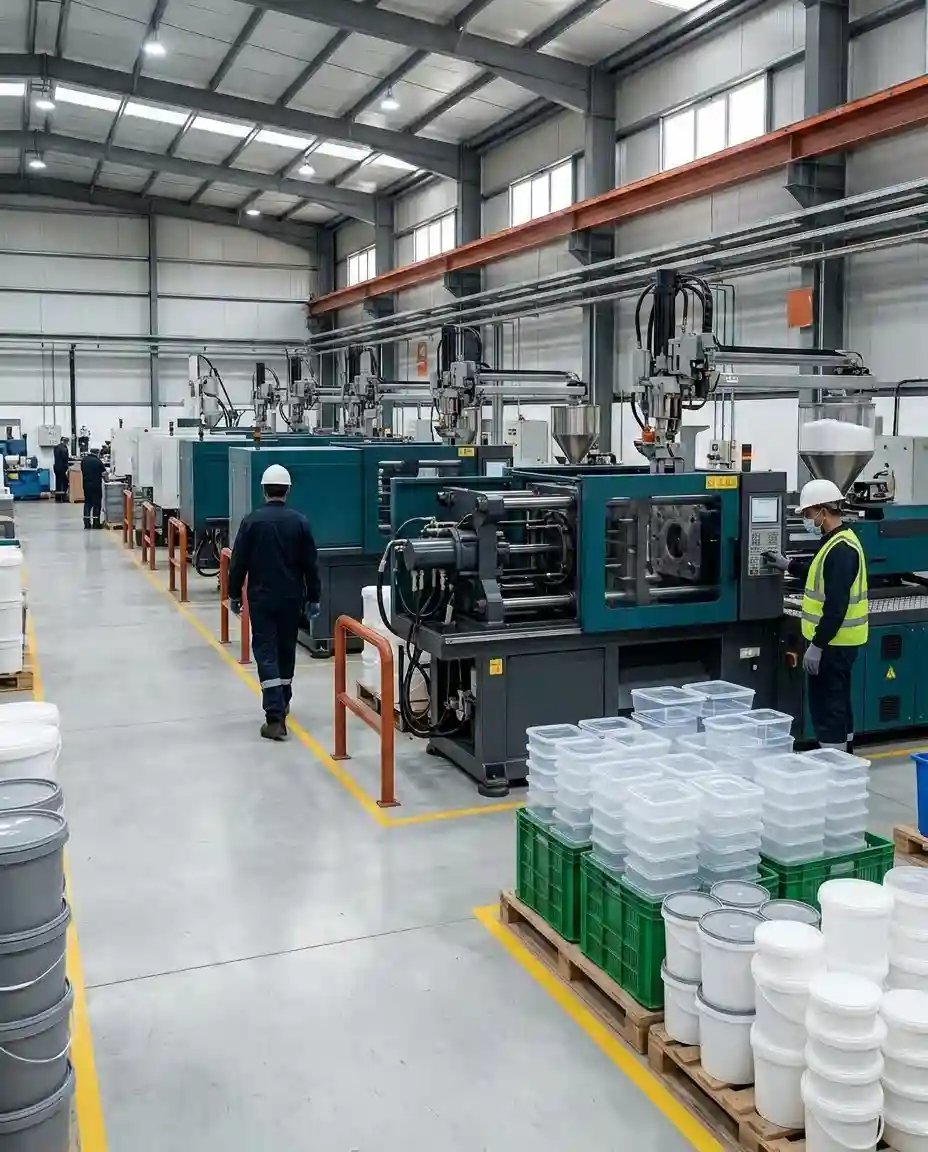 Checked in-line, not just at the end
Consistency is a safety feature, not a marketing line
A container that's food-safe on paper but inconsistent off the mould isn't food-safe in practice — wall thickness that drifts, warping, or a batch that behaves differently under heat all turn a compliant material into a real-world risk.
That's why checks happen during the run, not only at the end of it: wall thickness, fit and finish are monitored while a batch is being moulded, so a problem is caught before a pallet of it ever reaches your filling line.
A container that's easy to recycle, and easy to identify
Polypropylene carries resin identification code 5 — a single, easy-to-spot marking that tells a recycler exactly what they're handling. Because our containers are engineered around that one resin rather than blending in liners or laminated layers, a pack doesn't need to be broken apart into different materials before it can go through that stream — it's PP, all the way through.
- Single-resin construction — no mixed-material liners to strip out first, wherever the product design allows it
- Widely collectible — code 5 plastics are accepted by a growing number of municipal and industrial recycling streams
- Built to be reused first — PP's strength and heat tolerance mean a bucket or pail often sees a second life before it's ever recycled
The part of sustainability that happens on the floor
- Quality checks built into the run, not inspected only once it's finished
- Batch traceability from resin intake through to the finished container
- Company-owned delivery fleet, cutting the handling and re-boxing that damages stock and creates waste
- Plant laid out around material flow, reducing scrap from changeover and rework
- 100+ engineers, technicians and staff trained on the specification, not just the machine
- Latest-generation injection moulding machines, run and maintained for consistent output
Want the resin grade and compliance detail in writing?
Send us your product and fill requirements — we'll confirm the exact polypropylene grade, wall thickness and any documentation your quality team needs.
Request a quote Talk to us